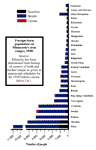
An example of the evolving population diversity in Minnesota is reflected by the foreign-born population on the three Iron Ranges as of 1910.
Finns predominated with a population of around 11,000. Slovenes were next, with more than 5,000. Italians and Swedes numbered in the range of 4,200 each. Croatians around 4,000. Norwegians and English-speaking Canadians 2,000 each. Followed by diminishing numbers of British, Poles, Montenegrins, Germans, Serbs, French Canadians, Swede-Finns, Bulgarians, Jews, Irish, Romanians, Slovaks, Hungarians, Russians, Greeks, Bohemians, Danes, other Europeans, Asians and Africans. |
|
|
Who are the Workers?
|
More than 26 ethnic groups are represented. Ethnicity has been determined from listings of country of birth and mother tongue as given in manuscript schedules for the 1910 federal census. [MIACOC]
|
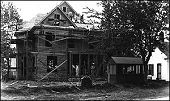
House construction, Northfield, ca. 1910.
Minnesota Historical Society
|











